What Does a Maritime Injury Attorney Do?
A Maritime Injury Attorney represents workers injured aboard commercial vessels, offshore platforms, tugboats, barges, cargo ships, fishing vessels, cruise ships, and other maritime operations. These cases often involve complex federal statutes, multiple employers, vessel owners, contractors, and insurance companies.
An attorney investigates how the accident occurred, reviews maintenance records and safety procedures, gathers medical and employment documentation, and determines whether employer negligence, unseaworthy conditions, or another legal issue contributed to the injury.
Who May Need a Maritime Injury Attorney?
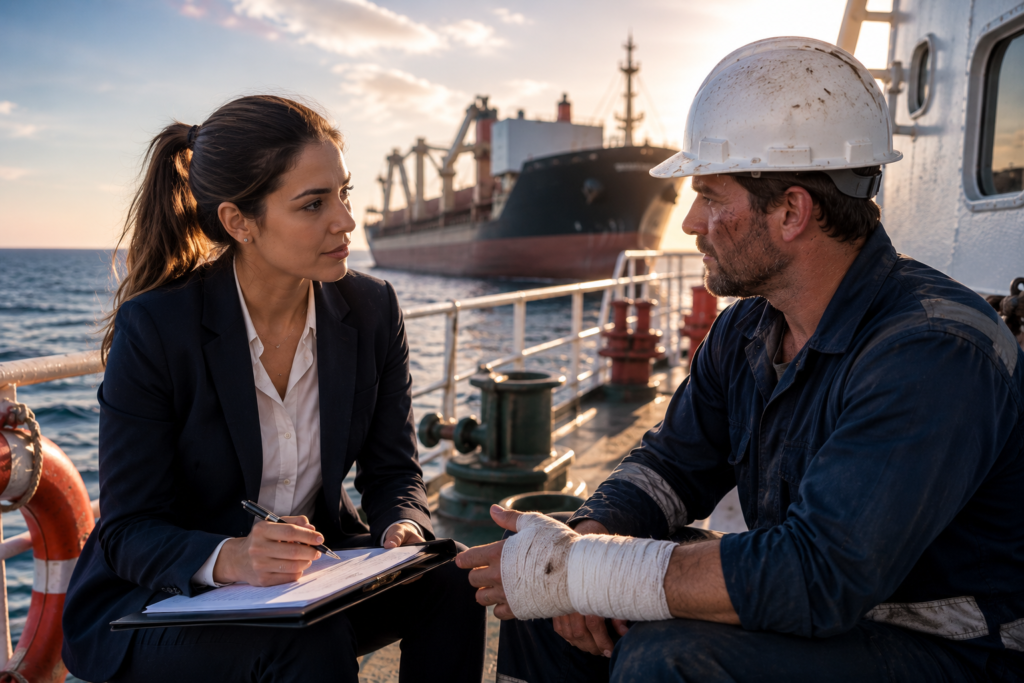
Many maritime professionals may have legal protections depending on their employment status and where the accident occurred.
- Merchant seamen
- Deckhands
- Tugboat crew members
- Barge workers
- Commercial fishermen
- Marine engineers
- Offshore oil and gas workers
- Ship engineers
- Captains and mates
- Dock and harbor workers
- Cruise ship employees
- Offshore support vessel crews
The law that applies depends on the worker’s duties, employment relationship, and the location of the accident.
Common Maritime Accidents
Maritime accidents can happen in ports, offshore platforms, commercial vessels, and inland waterways. Many incidents are linked to equipment failures, unsafe working conditions, or operational errors.
- Slip and fall accidents
- Vessel collisions
- Crane accidents
- Falling cargo
- Heavy machinery accidents
- Engine room fires
- Explosions
- Chemical exposure
- Electrical injuries
- Drowning incidents
- Confined space accidents
- Unsafe deck conditions
Common Maritime Injuries
Maritime accidents often cause severe injuries requiring extensive medical treatment and rehabilitation.
- Traumatic brain injuries
- Spinal cord injuries
- Burn injuries
- Broken bones
- Back and neck injuries
- Shoulder injuries
- Crush injuries
- Amputations
- Internal organ injuries
- Eye injuries
- Hearing loss
- Psychological trauma
Federal Maritime Laws That May Apply
Several federal laws protect injured maritime workers depending on their employment status and the circumstances of the accident.
- Jones Act – May allow qualifying seamen to pursue negligence claims against employers.
- General Maritime Law – Includes protections such as Maintenance and Cure and claims involving unseaworthy vessels.
- Longshore and Harbor Workers’ Compensation Act (LHWCA) – Covers many dock, harbor, and shipyard employees.
- Death on the High Seas Act (DOHSA) – May apply to certain fatal accidents occurring on the high seas.
- Outer Continental Shelf Lands Act (OCSLA) – May apply to certain offshore oil and gas workers.
Employer Negligence
Many maritime injury claims involve allegations that unsafe working conditions contributed to an accident. Examples may include inadequate training, defective equipment, poor maintenance, failure to enforce safety procedures, insufficient crew, or ignoring known hazards.
Determining liability often requires reviewing accident reports, maintenance records, inspection documents, witness statements, and other available evidence.
Related Articles
Official Resources
Compensation Available in Maritime Injury Claims
Depending on the applicable federal law and the facts of the accident, injured maritime workers may be entitled to pursue compensation for financial losses and other legally recoverable damages. The value of a claim depends on factors such as the severity of the injury, medical evidence, lost income, future treatment needs, and the circumstances surrounding the accident.
- Medical expenses
- Future medical care
- Lost wages
- Loss of future earning capacity
- Pain and suffering (where permitted by law)
- Permanent disability damages
- Rehabilitation expenses
- Maintenance and Cure for eligible seamen
- Wrongful death damages in qualifying cases
How a Maritime Injury Attorney Builds a Case
Maritime injury claims often require detailed investigations because accidents can involve vessel owners, employers, contractors, equipment manufacturers, and multiple insurance companies. Attorneys review available evidence to determine how the accident occurred and whether negligence or unsafe conditions contributed to the injury.
Depending on the case, investigators may examine vessel maintenance records, inspection reports, accident logs, safety manuals, employment records, medical reports, and witness statements to establish liability.
Important Evidence
- Accident reports
- Medical records
- Photographs and videos
- Witness statements
- Vessel maintenance logs
- Safety inspection reports
- Employment records
- Training documentation
- Equipment inspection reports
- Communication records
Settlement vs. Trial
Many maritime injury claims are resolved through negotiated settlements, while others proceed to litigation when liability or compensation is disputed. Whether a case settles or goes to trial depends on the evidence, the applicable law, and the willingness of the parties to reach an agreement.
Every case is unique, and no attorney can guarantee a specific outcome or settlement amount.
Frequently Asked Questions
Who can hire a Maritime Injury Attorney?
Maritime workers injured aboard commercial vessels, offshore platforms, tugboats, barges, fishing vessels, cruise ships, or in other qualifying maritime operations may benefit from legal guidance, depending on the facts of the case.
Which laws apply to maritime injury claims?
Claims may involve the Jones Act, General Maritime Law, the Longshore and Harbor Workers’ Compensation Act (LHWCA), the Death on the High Seas Act (DOHSA), or the Outer Continental Shelf Lands Act (OCSLA), depending on the worker’s employment and the location of the accident.
Can multiple companies be responsible?
Yes. Maritime accidents sometimes involve vessel owners, employers, contractors, subcontractors, or equipment manufacturers. Liability depends on the evidence and the specific circumstances of the accident.
What should I do after a maritime accident?
Seek immediate medical care, report the incident, preserve photographs and documents, collect witness information if possible, and keep copies of all medical and employment records.
Conclusion
Maritime injury cases differ from ordinary workplace accidents because they often involve specialized federal laws, offshore operations, and multiple responsible parties. Understanding your legal rights and preserving evidence early can be important when evaluating a potential claim.
Whether an injury is covered under the Jones Act, General Maritime Law, LHWCA, DOHSA, or another federal statute depends on the unique facts of each case. A careful legal evaluation helps determine which laws apply and what options may be available.